Yes. Oaxaca City and the Central Valleys where the palenques are sit under the US State Department’s Level 2 rating for Oaxaca state, “Exercise Increased Caution”, with no travel restrictions for US government staff in Oaxaca City, Monte Albán, Puerto Escondido or Huatulco. The restricted zones are elsewhere: Federal Highway 200 between Pinotepa Nacional and the Guerrero border, and the Isthmus region around Juchitán, Salina Cruz and San Blas Atempa, more than 200 km from the city (US travel advisory for Mexico). The UK FCDO singles out one Oaxaca issue: protests that block road access to the airport (FCDO safety and security).
What follows is the practical layer: where to sleep, how to get around, what to do with cash, and what to do when a road is blocked.
Neighbourhoods: where to stay
The four areas visitors use are all walkable from the Zócalo. Centro Histórico holds the Zócalo, Santo Domingo, the markets and most restaurants; bars close late and fireworks are routine. Jalatlaco is a 10-minute walk east, cobbled, painted, full of cafés, and the meeting point for the Matatlán palenque tour at the Templo de San Matías. Xochimilco is residential, 15–20 minutes north, with neighbourhood markets and small plazas. Reforma is 10–15 minutes out, the least touristic of the four, and some blocks feel quiet after dark (Oaxaca Auténtico, August 2026).
Tours collect in all of them. Half-day Monte Albán leaves from 5 de Mayo 300 in the Centro; the Hierve el Agua day from Cosijoeza 110A; the 13-tastes palenque tour from Reforma 403.
Book a mezcal experience
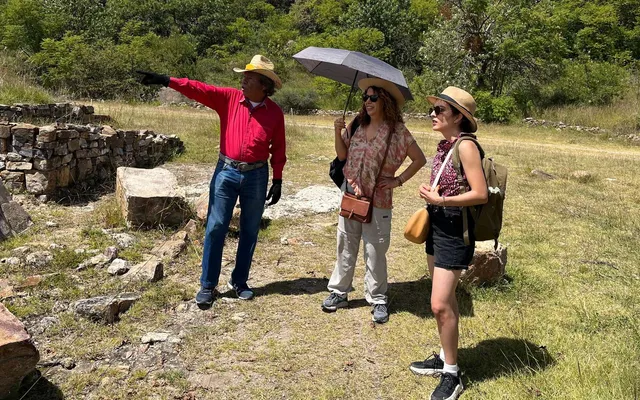
Monte Alban Half-Day Tour
From $35 $31 per person
4 hours · English, Spanish · Free cancellation
Archaeology-only outing with transport and a guide. The listed meeting point is 5 de Mayo 300.
After dark
Evenings in the Centro and Jalatlaco are busy until late. The FCDO’s Mexico-wide points apply here as anywhere: unlicensed taxi drivers have robbed passengers, and criminals have drugged travellers in bars before robbing them, so keep your drink in sight (FCDO). For the ride home, use a DiDi-booked taxi or one called by the restaurant.
Taxis, DiDi and Uber
Uber and Lyft do not operate in Oaxaca City or the state. The DiDi app works, but it sends a regular Oaxaca taxi. DiDi pickups are not allowed at the airport (Travel Mexico Solo, May 2025). The state’s Secretaría de Movilidad has said publicly that Uber, DiDi and inDrive lack state authorisation, so the app is a convenience for hailing a licensed cab, not a separate fleet (Travel Report, July 2026).
Street taxis have no meters. Agree the fare before getting in.
At the airport, use the authorised ground-transport counter at arrivals: shared van to the Centro about MXN 135 per person (July 2026), private taxi MXN 200–300 (Travel Report, Oaxaca Capital).
Cash and ATMs
The FCDO reports criminals targeting people at ATMs and exchange offices across Mexico (FCDO). Withdraw inside a bank branch in daylight and carry only the day’s pesos.
You will need those pesos. Monte Albán charges MXN 210 at the gate (INAH), Hierve el Agua MXN 70, Mitla MXN 210. The Hierve el Agua tour operators warn that ATMs are scarce on the route.
Road blockades (bloqueos)
Blockades are Oaxaca’s most likely disruption. On 27 May 2026 the CNTE teachers’ union closed the five main exits from the city (towards the Isthmus, the coast, Mexico City, Tuxtepec and Zaachila) plus the CAPUFE bridge on Highway 190 and the Huitzo toll booth (ADN40); the airport access road is a recurring target, which is the FCDO’s specific warning.
Check before you set out. The state traffic police post live reports on X at @PolVial_GobOax, and El Heraldo Oaxaca runs a daily blockade map (Heraldo blockade tracker). On a flight day leave for the airport early, and never drive through a blockade; the FCDO also notes unofficial roadblocks in remote areas.
A booked tour shifts this problem to the driver; the local press lists Zimatlán–Zaachila as the usual detour when the main exits close. The 5-hour Monte Albán and Capotlán distillery trip on the Monte Albán combo page collects at your hotel and, at $21, is the cheapest way to hand the driving to someone else.
Water, food, sun, altitude
Drink boiled or bottled water and skip ice (FCDO health advice).
The city is at 1,555 m, so the sun is strong and April afternoons reach 33 °C (Oaxaca City climate). Monte Albán has little shade: hat, sunscreen, water.
Mezcal is 35–55% alcohol by law (NOM-070-SCFI-2016), and the 13-tastes tour tells guests to eat well before starting: take that literally.
Earthquakes and hurricanes
Tremors are regular in Oaxaca and Guerrero states, and the hurricane season runs June to November on both coasts (FCDO). Oaxaca City is inland; when a Pacific storm is forecast, the valleys get rain and road closures rather than wind, and the state posts the alerts at Protección Civil Oaxaca.
Solo and women travellers
The FCDO records harassment, robbery and sexual assault of women travelling alone on public transport in Mexico (FCDO). In Oaxaca that points to the long-distance and second-class buses rather than the tourist core; a DiDi-hailed cab or a small-group tour is the alternative. The Centro tasting caps at 10 guests, the Matatlán palenque tour at 12.
If something goes wrong
- 911 is the emergency number for police, fire and ambulance (Protección Civil Oaxaca, FCDO health).
- Centro de Protección al Turista, Av. Juárez 703, Centro: help for theft, lost documents and bad service, Monday–Friday 8:00–20:00, Saturday 10:00–15:00, tel. 951 502 1200 ext. 1204 (Oaxaca tourism secretariat).
- Ángeles Verdes, roadside assistance on highways, tel. 078 (SECTUR Oaxaca).
- Your consulate for a lost passport; keep a photo of the passport page on your phone.
For dates and day plans, go to planning your trip; for the villages and distances, the mezcal route.