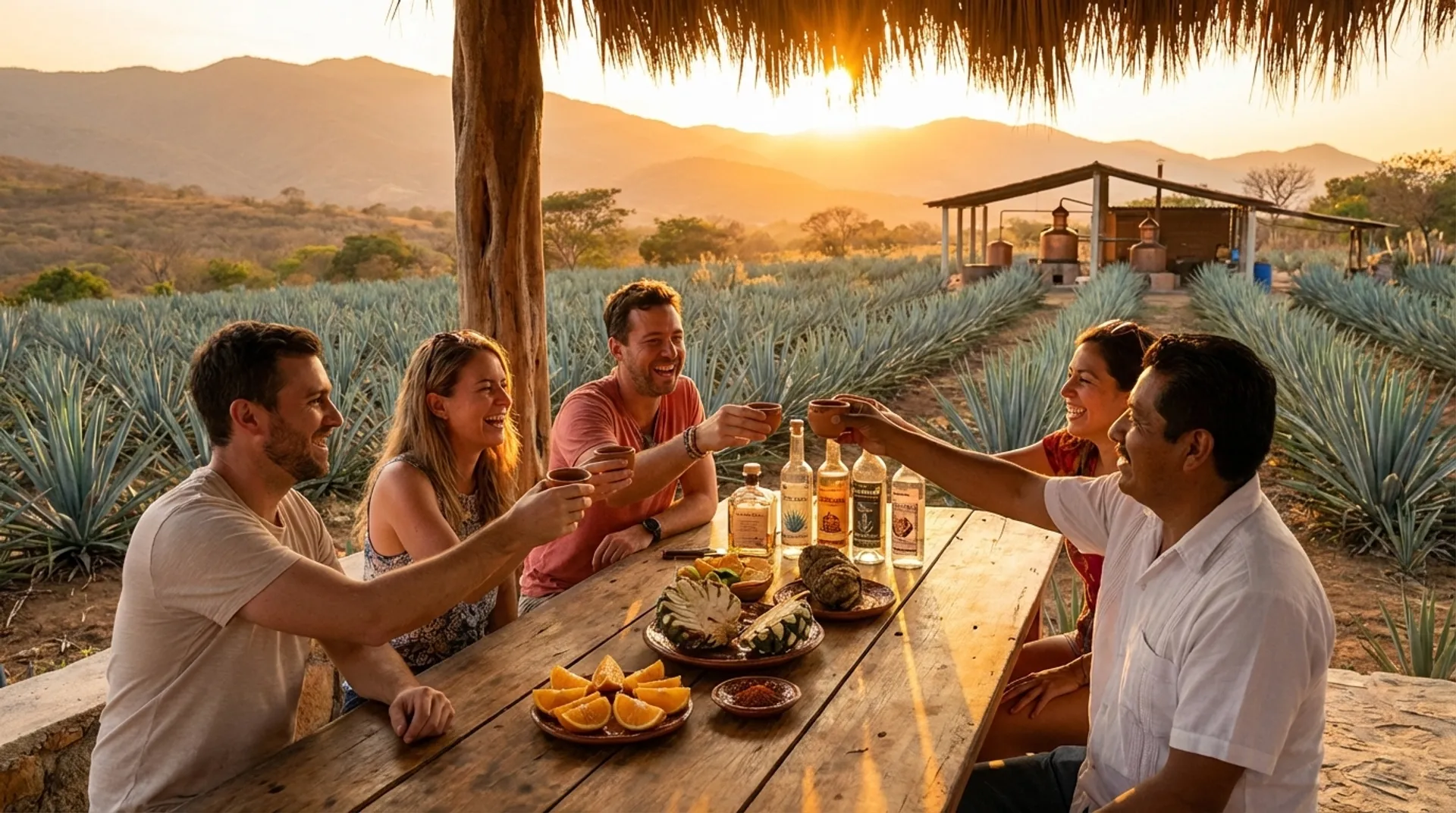
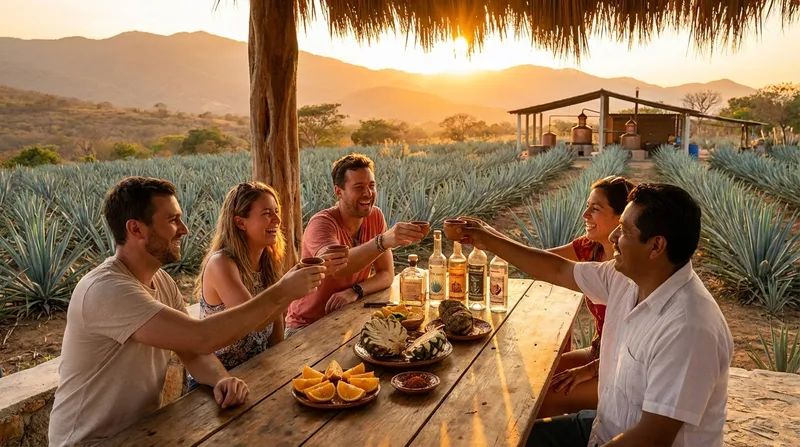
The "Route of the Ancestors": Why This Combo Works
Grouping Hierve el Agua with a Mezcal tasting isn't just smart scheduling—it is the only way to respect the geography.
To reach the falls from Oaxaca City, you drive Highway 190. This isn't a boring commute. The "Pan-American" slices through the valley's cultural spine, passing directly by:
- 🌳 The Tule Tree: The widest trunk on earth.
- 💀 Mitla: The Zapotec "City of the Dead."
- 🥃 Santiago Matatlán: The dusty, smoky "World Capital of Mezcal."
Driving 2 hours each way just for a swim is a waste of gas.
Since Matatlán guards the mountain pass, stopping there on the return leg breaks the monotony. You can smell the roasted agave before you see it. It's the perfect excuse to visit a traditional Palenque (distillery) right at the source.
Geology 101: The "Boiling" Rock
First, a translation warning: "Hierve el Agua" means "The Water Boils".
It doesn't. The name refers to the water bubbling up from underground springs, but the pools are actually cool.
These aren't standard waterfalls. You are looking at petrified waterfalls (travertine), frozen in stone. Mineral-heavy water has trickled down this cliff face for millennia, building a white wall that stands 60 meters (200 feet) high.
It's chemistry, not magic. The water is super-charged with calcium carbonate. As it flows over the edge, it leaves minerals behind that calcify into rock—the same process that grows stalactites in caves.
Oaxaca shares this geological oddity with only one other place: Pamukkale, Turkey.
Love the mezcal you tasted on the tour?
Don't worry about carrying heavy bottles back home. You can find many of the same artisanal brands in the city.
Read our guide to the Best Mezcalerias in Oaxaca City →