Tequila is made from one plant, blue Weber agave, in a legally defined zone centred on Jalisco, and can contain up to 49% non-agave sugar. Mezcal is made from dozens of agave species, mostly in Oaxaca, must be 100% agave, and is usually cooked in an earth pit, which is why it tastes of smoke and tequila does not. Both are bottled at 35–55% alcohol under separate Mexican standards: NOM-006 for tequila, NOM-070 for mezcal.
That is the answer. The table has the detail.
The comparison
| Mezcal | Tequila | |
|---|---|---|
| Agave | Any permitted species: Espadín, Tobalá, Tepeztate, Madrecuixe, Arroqueño and more | Agave tequilana Weber, blue variety, only |
| Where | Denomination of origin across several states; Oaxaca is the heart of it | Jalisco plus designated municipalities in four other states; Oaxaca is not among them (CRT) |
| Agave content | 100% agave, always | ”100% Agave”, or “Tequila” with a minimum of 51% agave sugars (CRT) |
| Cooking | Earth pit over hot stones, 3–5 days; masonry ovens or autoclaves in the industrial category | Masonry ovens or autoclaves at 120–125 °C for up to 6 hours (CRT); no pit |
| Still | Small direct-fire copper alembics or clay pots, two runs | Copper or stainless pot stills, two runs; columns permitted |
| Categories | Mezcal, Artesanal, Ancestral (by equipment); classes Joven, Reposado, Añejo, Abocado con, Destilado con | Blanco, Joven, Reposado (2+ months oak), Añejo (1+ year), Extra Añejo (3+ years) |
| Flavour | Smoke, roasted agave, earth, herbs, minerals; changes with the agave | Fresh agave, citrus, pepper; oak and vanilla when aged |
| ABV | 35–55%; village bottles are often in the high 40s (Alipús San Andrés: 48%) | 35–55%; export brands lower (Don Julio Blanco: 38%) |
| Price in Mexico, 700–750 ml | Artesanal Espadín MXN 850–909; clay-pot Espadín MXN 2,031; wild agave MXN 1,700–2,833 | Don Julio Blanco MXN 495, Herradura Blanco MXN 646 (Vinos América) |
| How it is served | Sipped neat at room temperature from a copita or jícara, with orange and sal de gusano | Neat in a caballito, or in Margaritas and Palomas; salt and lime is a shot ritual, not a tasting one |
| Brands you will meet | Del Maguey, Real Minero, Vago, Koch, Alipús, El Jolgorio, Rey Campero, Unión, 400 Conejos | Don Julio, Herradura, Fortaleza, Siete Leguas, Tapatío, Patrón, Jose Cuervo |
Mezcal prices from Mezcal Vago, Real Minero and Vinos y Licores; tequila from Vinos América.
If you want to taste the difference rather than read it, The Best Mezcal Tasting pours six-plus mezcals across categories and agaves in two hours in the Centro (from $36, 4.8★ from 20 reviews).
Book a mezcal experience
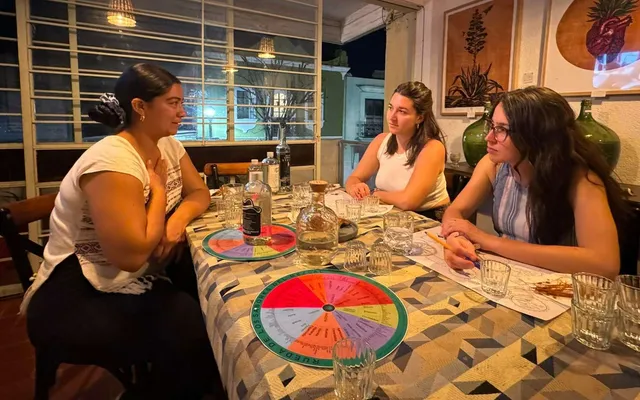
The Best Mezcal Tasting
From $40 $36 per person
2 hours · English, Spanish · Up to 10 · Free cancellation
City tasting with six or more mezcals, snacks, a cocktail and audiovisual production explanations. Listed maximum 10 guests; adults 18+.
Is tequila a type of mezcal?
Historically yes: “mezcal” was the generic word for any distilled agave, and tequila was the mezcal from the town of Tequila. Legally today no. Tequila has had its own denomination of origin since 1974 (CRT) and its own standard, and a bottle cannot be labelled both. Treat them as two spirits from the same family, the way Cognac and Armagnac are both brandy.
Why mezcal is smoky and tequila is not
The pit. Agave for mezcal spends three to five days buried over wood-fired stones; agave for tequila is steamed in a brick oven or an autoclave for hours. Smoke is a by-product of the cooking, not a flavouring, and its intensity varies from palenque to palenque: a clay-pot mezcal from Santa Catarina Minas can be softer and more floral than an Espadín from Matatlán. Tequila’s flavour comes from the plant and, in aged classes, from the barrel.
Tequila also allows 49% of the sugar to come from cane or corn in the plain “Tequila” category, which is why “100% Agave” is printed so large on the good bottles. Mezcal has no mixto tier at all.
Which is stronger?
Neither, by law: both ranges are 35–55%. In practice mezcal is usually bottled hotter. Palenque mezcal comes off the still at whatever the batch delivers and is rarely watered far down; Alipús San Andrés is 48%. Mass-market tequila is proofed to 38–40% for export; Don Julio Blanco is 38%. Read the ABV on the label, and remember that a copita of 48% mezcal is a smaller pour than a shot.
Aging is the other reversal. Reposado and añejo are the prestige tiers in tequila; in mezcal the prestige sits with young, unaged bottles from rare agaves, and wood is treated as something that hides the plant.
Where to try both in Oaxaca
Oaxaca’s mezcalerías rarely stock tequila, and a city tasting is mezcal only. For the drink itself start with Mezcal 101; for the process that creates the smoke, how mezcal is made; for bars, mezcalerías in Oaxaca City; and for a guided flight with explanations, tastings and classes in the city.