Mezcal is a Mexican spirit distilled from the cooked heart of the agave plant, and by law it is 100% agave, bottled between 35% and 55% alcohol. Tequila is the famous cousin made from one agave in Jalisco; mezcal is made from dozens of agaves, most of them in Oaxaca, and most of it is still cooked in an earth pit, which is where the smoke comes from. The rules are set by Mexico’s mezcal standard, NOM-070-SCFI-2016.
That is the whole definition. The rest of this page is what the label does not spell out: which agave you are drinking, how it was made, and how Oaxacans actually drink it.
Mezcal, Artesanal or Ancestral: what the category on the label means
Every bottle carries one of three production categories. They describe equipment, not quality, and the difference is easy to see once you have stood in a palenque.
| Category | Cooking | Milling | Fermentation | Distillation |
|---|---|---|---|---|
| Mezcal | Pit, masonry oven or autoclave | Tahona, mechanical shredder or mill | Wood, stone, concrete or stainless-steel vats | Copper or stainless stills, columns allowed |
| Mezcal Artesanal | Earth pit or masonry oven | Tahona, Chilean mill, trapiche, shredder or wooden mallet | Stone, earth, wood, clay or animal-skin vessels; fibre may stay in | Direct-fire copper alembic or clay pot |
| Mezcal Ancestral | Earth pit only | Mallet, tahona or Chilean mill | As above, agave fibre must stay in | Direct-fire clay pot with a clay or wooden cap |
Source: NOM-070, section 4.4. Most bottles poured in Oaxaca’s mezcalerías are Artesanal; Ancestral is the small clay-pot minority, and the plain “Mezcal” category is where the supermarket brands live.
Strength varies by bottle inside the 35–55% range. A village Espadín such as Alipús San Andrés is bottled at 48% (Vinos y Licores); supermarket brands are proofed lower. Neither number is a quality score.
A two-hour session such as The Best Mezcal Tasting in the Centro (from $36, six-plus mezcals, 4.8★ from 20 reviews) walks through these categories glass by glass, which is the fastest way to make the table above mean something.
Book a mezcal experience
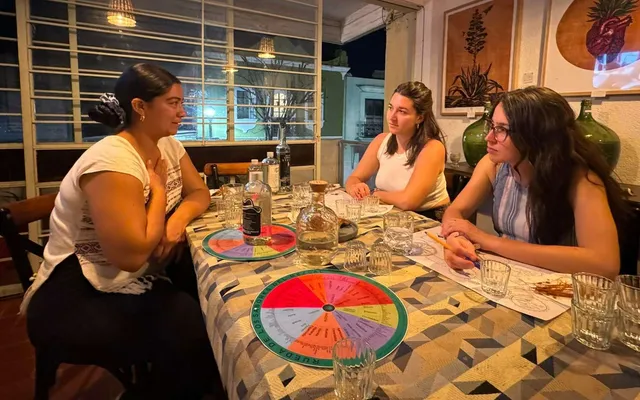
The Best Mezcal Tasting
From $40 $36 per person
2 hours · English, Spanish · Up to 10 · Free cancellation
City tasting with six or more mezcals, snacks, a cocktail and audiovisual production explanations. Listed maximum 10 guests; adults 18+.
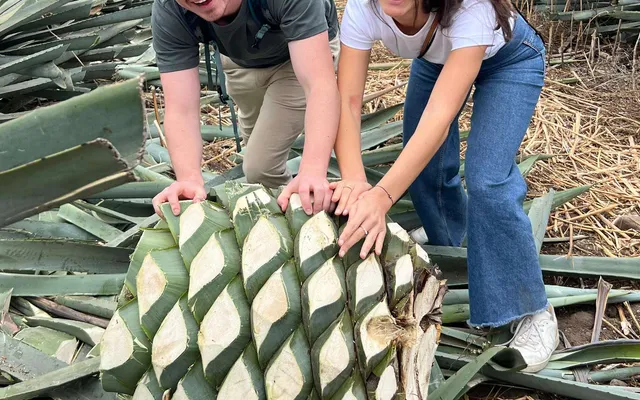
The Mezcal Journey
From $104 per person
6 hours · English, Spanish · Up to 12 · Free cancellation
One or two palenques near Santiago Matatlán, agave fields, tastings and an Oaxacan lunch. Transport leaves from a city meeting point; listed group maximum 12.
Six agaves you will see on every menu
The plant matters more than the brand. Years to harvest are from Difford’s Guide; flavour notes are the ones producers print on their own bottles.
- Espadín (Agave angustifolia), 5–9 years, cultivated. The workhorse: sweet cooked agave, citrus, light smoke. Unión describes its Espadín as “sweet and fruity”; Amores lists citrus, wildflowers and damp earth. Almost every entry-level bottle is Espadín.
- Tobalá (Agave potatorum), 10–15 years, wild or semi-wild. Small piñas, low yield, so it costs two to three times an Espadín. Floral and fruity rather than smoky.
- Tepeztate (Agave marmorata), 25–35 years, wild. The longest wait in the business and about a third of Espadín’s yield. Green, vegetal, peppery; the bottle most bartenders push on a second visit.
- Madrecuixe (Agave karwinskii), 9–20 years. Tall, trunk-like plant. Mineral, earthy, herbal; Difford’s describes the related Barril as “earthy, grassy, roasted vegetable, minty and slightly spicy”.
- Arroqueño (Agave americana), 20–25 years. Huge piñas, deep and savoury with a long finish.
- Cuishe (Agave karwinskii), a slimmer cousin of Madrecuixe. Dry, herbal, often described as green pepper and wet stone.
An ensamble is a blend of two or more of these cooked and distilled together. Pechuga is not an agave at all: it is a mezcal re-distilled with fruit, grains and traditionally a chicken or turkey breast, and it is labelled under the NOM class “Destilado con”.
How to drink it: copita, orange, sal de gusano
Mezcal is sipped at room temperature from a wide, shallow vessel: a clay copita or a jícara cut from a dried gourd, both designed to open the aromas the way a narrow shot glass cannot (Food Republic). Nobody who makes it drinks it in one go. The Oaxacan phrase is besito a besito, kiss by kiss.
Alongside the glass comes a plate of orange slices and sal de gusano: agave worms toasted and ground with salt and dried chile, roughly three parts larvae to one part chile. You alternate a sip with a bite of orange dipped in the salt; the citrus resets the palate and the salt pulls the fruit out of the smoke (Masienda).
Water on the side is normal. Ice is not.
The worm in the bottle
The worm is marketing, not tradition. Trademark records show “Legítimo Mezcal de Oaxaca con su Propio Gusano” registered in 1944 and Gusano de Oro in 1948, and the bottles that carry a larva today are mass-market brands aimed at export (InsideHook). No Artesanal or Ancestral producer of note puts one in. If you want the worm, eat it in the salt.
What a bottle costs in Oaxaca
Prices below are current online prices from the producers and shops themselves, all for 750 ml unless stated.
- Supermarket tier: 400 Conejos Joven, 700 ml, MXN 545 (Bodegas Alianza); Unión Uno, MXN 608 (Panoli).
- Artesanal Espadín from a named village: Mezcal Vago Espadín Jarquín or Espadín Joel, MXN 850 each (Vago shop); Alipús San Andrés, 48%, MXN 909 (Vinos y Licores).
- Ancestral clay-pot Espadín: Real Minero Espadín, MXN 2,031 (Real Minero shop).
- Wild agaves: Vago MadreCuishe or Tepeztate–Espadín ensamble, MXN 1,700; Real Minero Tobalá capón, MXN 2,615; Tepextate at In Situ’s bottle shop in the Centro, MXN 2,000–2,100 (In Situ).
- Bar-shop range: Mezcaloteca’s online shop lists bottles up to MXN 1,600 (Mezcaloteca).
A clay copita, if you want to take the ritual home, is MXN 100 at In Situ.
For the process behind those prices read how mezcal is made; for the tequila comparison, mezcal vs tequila; for a shopping list by brand, best mezcal brands and types; and for where to drink it tonight, mezcalerías in Oaxaca City.