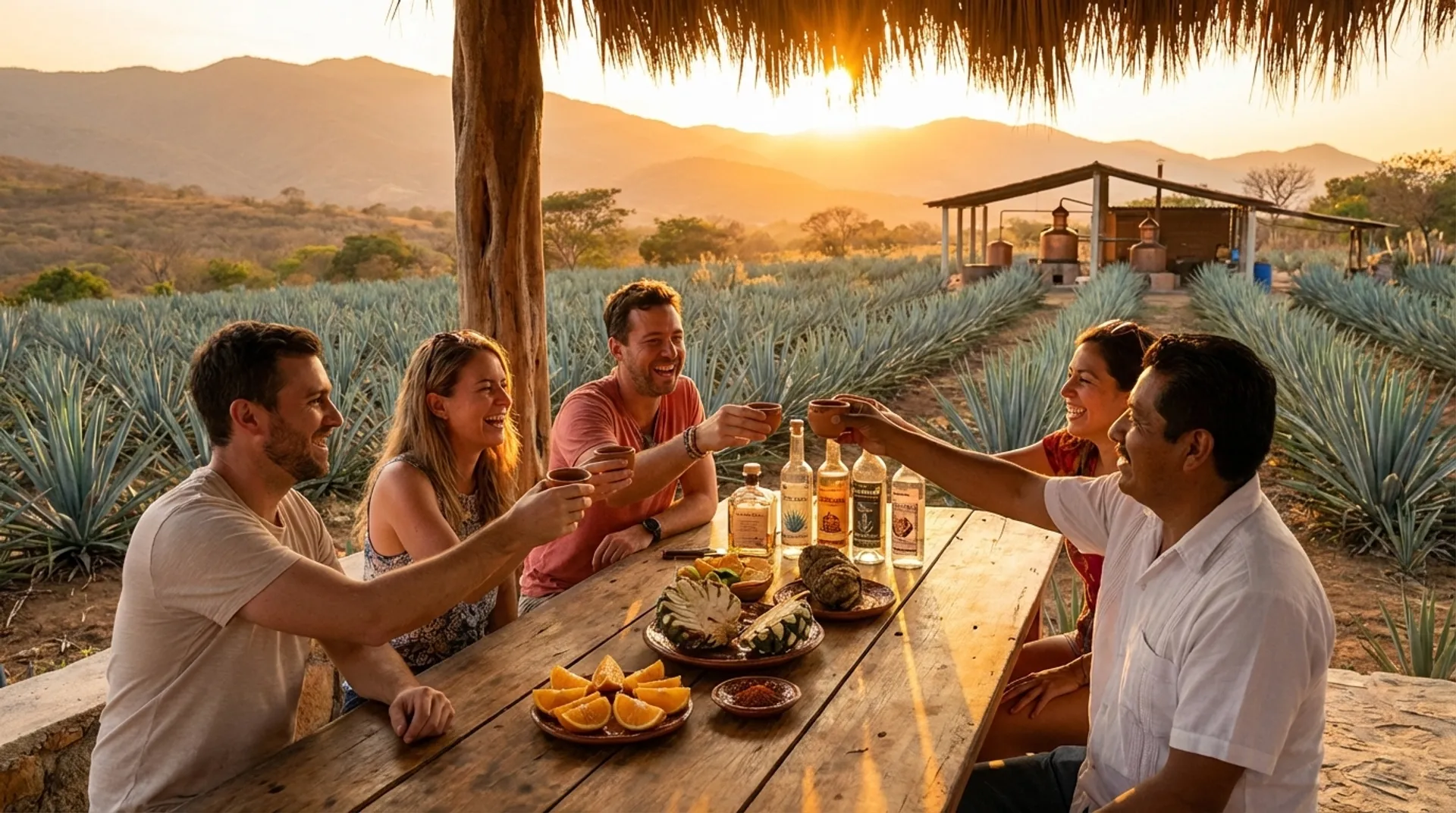

⚡ What is Mezcal? (The 30-Second Answer)
Mezcal is a Mexican spirit made from roasted agave. It's the parent category of tequila (all tequila is mezcal, but not all mezcal is tequila). What makes it special: the agave hearts are cooked in underground pits with fire and smoke, giving mezcal its signature smoky, complex flavor. While tequila uses only one agave type, mezcal can be made from 40+ varieties—each with a unique taste profile.
Why Mezcal Matters (Beyond the Smoke)
If you've tried mezcal before and only remember "smoky tequila," you've barely scratched the surface.
Mezcal is one of the last major spirits still made by hand. While whisky, vodka, and even most tequila are produced in industrial facilities, traditional mezcal is crafted by families on small farms called palenques. A horse crushes the agave. Wood fires heat clay pot stills. The master distiller (maestro mezcalero) tests alcohol content by watching bubbles in a gourd—no digital instruments.
When you drink mezcal, you're tasting terroir, tradition, and time. A Tepeztate mezcal comes from a plant that took 25 years to mature. That's older than most bartenders.
The 5 Things Every Beginner Should Know
1. Mezcal ≠ Smoky Tequila
Yes, mezcal is often smoky. But that's like saying wine is "grape-flavored." The smoke is just one note in a symphony. Depending on the agave type, you might taste:
- Floral and perfumed (Tobalá)
- Spicy with jalapeño heat (Tepeztate)
- Mineral and earthy (Cuishe)
- Sweet and fruity (Espadín)
The smoke comes from the cooking process—not all mezcals are equally smoky.
2. The Agave Makes the Flavor
Unlike tequila (which must use only Blue Weber agave), mezcal can be made from over 40 different agave species. This biodiversity is mezcal's superpower.
Think of it like wine: Chardonnay and Pinot Noir come from different grapes and taste completely different. Espadín and Tobalá mezcals are just as distinct.
3. "Joven" is Usually Best
Unlike whisky or tequila, aging mezcal in barrels (reposado or añejo) is not necessarily better. Most mezcal experts prefer Joven (unaged/young) mezcal because it lets you taste the pure agave character without oak interference.
If you want smooth, look for a good Tobalá—not a barrel-aged bottle.
4. Price Reflects Rarity, Not "Quality"
A $150 Tepeztate isn't "better" than a $40 Espadín—it's rarer. Tepeztate takes 25 years to mature and can't be farmed. Espadín matures in 7 years and is cultivated sustainably.
A well-made Espadín from a skilled mezcalero can be more enjoyable than a poorly made rare agave. Start with Espadín, then explore.
5. Sip, Don't Shoot
Mezcal isn't tequila. Don't throw it back. Instead:
- Pour into a wide glass (traditional: a copita or jícara gourd)
- Smell it first—most of the experience is aroma
- Take a small sip and let it coat your tongue
- Breathe out through your nose to capture the finish
Traditional accompaniments: orange slices with sal de gusano (worm salt with chili).
Go Deeper: Mezcal Guides
How Mezcal is Made
The 7-step process from harvest to bottle. Underground ovens, stone wheels, clay pot stills—see why it takes 2 weeks to make one batch.
Mezcal vs. Tequila
The definitive comparison. 3 key differences in plant, production, and flavor. Plus: why all tequila is technically mezcal.
Best Mezcals & Agave Types
The 5 essential agaves to try, top brands by price point, and what to buy in Oaxaca. Your buyer's guide.
Best Mezcalerías in Oaxaca
Where to drink mezcal in Oaxaca City. From fancy tasting rooms to hidden local spots.
The 3 Official Mezcal Categories
Mexican law defines three categories based on production methods. Understanding these helps you know what you're buying:
Mezcal
(Industrial)
- • Agave can be cooked in autoclaves
- • Mechanical shredders allowed
- • Stainless steel stills
- • Lowest cost, least traditional
Artesanal
(Most Common)
- • Underground pit cooking required
- • Tahona (stone wheel) or hand-crushing
- • Copper pot stills
- • Best balance of quality & price
Ancestral
(Traditional)
- • Underground pit cooking required
- • Hand-crushing only (mallet)
- • Clay pot stills only
- • Rarest, most expensive
Most quality mezcal you'll encounter is Artesanal. It's the sweet spot between authenticity and availability. Ancestral mezcals are special-occasion bottles—the clay pot distillation adds earthy, mineral notes.
Frequently Asked Questions
What is mezcal made from?
Why is mezcal smoky?
Is mezcal stronger than tequila?
How should a beginner drink mezcal?
What's the worm in mezcal?
Does mezcal give you a hangover?
Ready to Experience Mezcal in Oaxaca?
Reading about mezcal is one thing. Watching a maestro mezcalero crack open an underground oven is another. See the process, taste straight from the still.

AboutDiego Garcia
Senior Mezcal Reviewer & Industry Expert
Mezcal specialist with 15 years of experience in the Oaxacan spirits industry. Dedicated to preserving traditional production methods.
Read full profile & articles